
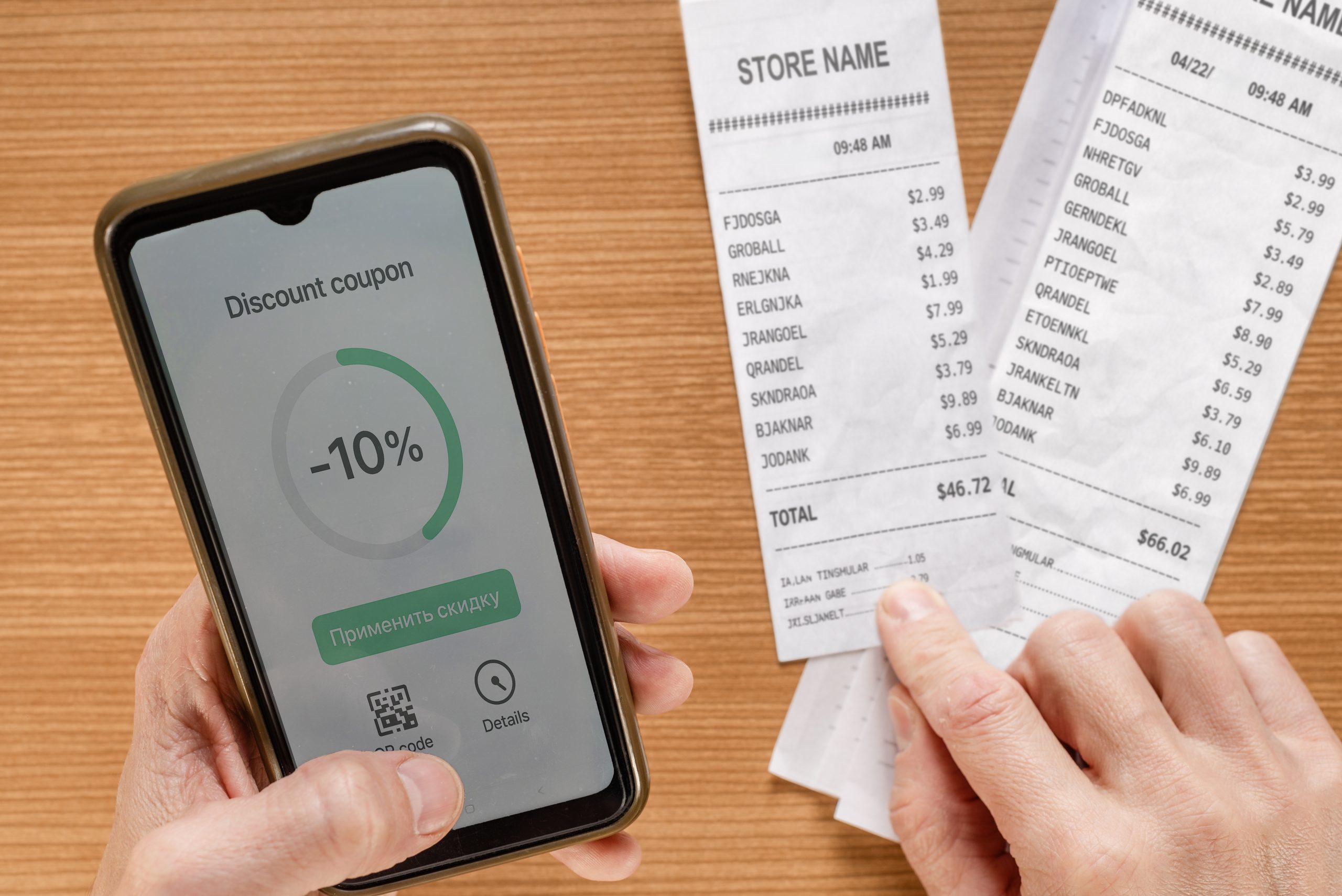
Digital coupons are the present and future. Thanks to technology, finding digital coupons is possible for anyone with an internet or data connection, and stores are increasingly accepting digitally presented barcodes over print codes. However, print coupons aren’t dead — they simply play a slightly different role in marketing today.
The Rise of Digital Coupons
Ever since the digital age, it’s become easier than ever to market coupons — with a few clicks, businesses can alert customers worldwide to the benefits of a retail discount. Coupon use has risen nearly 30 percent since 2008 according to a Knowledge Networks trend report, driven largely by rising awareness that digital coupons exist at all.
Digital coupons have proven very effective at bringing in new customers, boosting last-minute sales, increasing return on investment, and raising demand for specific products. One of the most notable findings: 46 percent of consumers who redeem a digital coupon hadn’t purchased that product or service previously — the coupon itself is what prompts the new spending.
Redemption rates have also spiked since digital coupons became mainstream, averaging around 77 percent versus print’s lower rate. That’s a double-edged sword: more redemptions mean more sales, but also a bigger hit to margin per transaction. Digital couponing carries its own cost too, and companies should budget for the reduced ROI that typically comes with online coupons.
The Performance of Print Coupons
Print coupons have been effective since Coca-Cola issued the first one in 1887, and billions of consumers still take advantage of print offers from retailers and manufacturers every year. The rise of the smartphone made digital coupons far more convenient, leading many to assume print was on its way out — but that’s proven untrue.
Print coupons still represent roughly 44 percent of the coupon market, and most businesses find they return a higher ROI than their digital counterparts. They haven’t lost popularity with consumers either: around 70 percent still look for and use traditional print coupons in newspapers, magazines, and direct mail.
The Verdict: Digital or Print?
The right format depends on your budget, marketing strategy, and target audience — but a few key differences can help guide the decision.
- Digital coupons perform better at customer acquisition. They tend to outperform print by roughly 35 percent at bringing in new customers, retaining existing ones, and raising brand awareness.
- Print coupons typically provide a higher ROI. Digital’s higher redemption rate means more people using the coupon, which reduces revenue per sale — digital ROI tends to run about 18 percent lower than print.
- Digital coupons are easier to distribute. No printing or mailing required — email, social, and a simple newsletter strategy can reach a much larger audience with far less effort.
- Print coupons are historically cheaper to produce. Printing and shipping costs are often lower than the cost of building out a full digital marketing operation, though this is frequently offset by digital’s stronger performance.
Both formats have real advantages, and most businesses use a healthy balance of the two to get the best of both worlds. As technology continues to progress, it’s worth keeping an eye on couponing trends and adapting your mix accordingly rather than betting entirely on one format.
Contact Mandlik & Rhodes Today
Monitoring current couponing trends can be difficult, and it may not be something your team is equipped to handle in-house — at Mandlik & Rhodes, we’ve been serving the coupon industry since 1995, with coupon clearing and real-time reporting for manufacturers and full-service coupon reimbursement for retailers.
For additional information regarding our coupon processing and mail-in rebate processing services, or for questions about how the process works, please don’t hesitate to contact us today by calling 847-277-0433 or via email at info@mandlik-rhodes.com. A Mandlik & Rhodes team member would be happy to assist you in any way possible.